
NLNG MD: Global LNG Industry Must Rethink Contracts to Survive Geopolitics and Affordability Crisis
Credit:
Nigeria LNG Managing Director Philip Mshelbila has warned that the global liquefied natural gas industry must urgently rethink its contract structures or risk being sidelined in the energy transition.
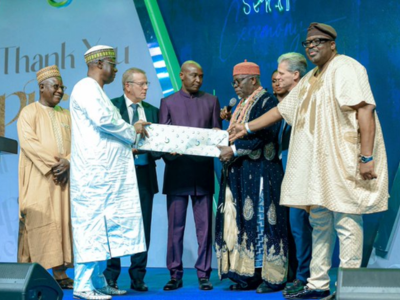
Speaking at the 25th World LNG Summit & Awards in Istanbul, he cautioned that without coordinated reforms across the LNG value chain, developing nations could be pushed back to coal, deepening the global energy divide.
Addressing the high-level panel on “Energy Expansion in a Challenging Global Trade Environment,” Mshelbila argued that traditional LNG contracts, focused narrowly on volume and price, are no longer fit for purpose in an era defined by sanctions, rerouted shipping lanes, and the weaponisation of energy. He insisted that contracts must evolve to actively manage sovereign risk, diversify supply sources and delivery routes, and embed resilience against geopolitical shocks.
Mshelbila outlined availability, affordability, and decarbonisation as the three pillars essential for LNG’s survival. He pointed to U.S. and Qatari mega-expansions, alongside NLNG’s own Train 7 project, which will add eight million tonnes per annum by 2027, as critical to ensuring supply growth. He warned that affordability remains the biggest threat, with repeated price spikes forcing emerging markets to revert to cheaper but dirtier coal. Decarbonisation, he added, must be accelerated across the entire LNG value chain if natural gas is to retain its role in a lower-carbon future.
Reflecting on the market’s transformation since the 2022 Russia–Ukraine crisis, Mshelbila noted the shift from spot-market dominance to renewed demand for both short- and long-term contracts, driven by heightened geopolitical risk. “Retaining the status quo will stall energy expansion and widen the divide between those who can afford clean molecules and those forced back to coal,” he warned.
His intervention comes as spot LNG prices hover near multi-year highs, leaving developing economies in Asia and Africa struggling to secure affordable long-term supply. The summit, hosted by Turkey’s BOTAŞ, has more than 1,000 delegates from 60 countries debating the future of LNG in a volatile global trade environment.







0 Comment(s)